


TL;DR:
- Choosing a trusted PADI-certified instructor involves defining your dive goals and non-negotiables beforehand to ensure a tailored experience.
- Thoroughly research and verify credentials using PADI Pro Chek™, reviews, and social media to confirm instructor credibility and safety standards.
Imagine this: you’ve flown all the way to Bali, the ocean looks incredible, and you’re buzzing with excitement. Then you realise you have absolutely no idea how to choose a dive instructor you can actually trust. It’s one of the most common anxieties travellers face before their first Bali dive, and it’s completely understandable. Safety, quality teaching, and a genuine personal connection all matter enormously underwater. This guide walks you through every practical step, from clarifying your goals before you search, to verifying credentials and confidently confirming your booking with a PADI-certified instructor you feel good about.
Key Takeaways
| Point | Details |
|---|---|
| Prepare your requirements | Clarifying your skill level, goals, and preferences will speed up your instructor search. |
| Verify credentials | Always confirm instructor credentials and read reviews before booking any Bali dive experience. |
| Speak with instructors | A direct conversation is the best way to find an instructor who matches your personality and expectations. |
| Go beyond ratings | Rely on more than just PADI or star ratings—look for genuine teaching dedication and specific experience. |
| Book securely | Use trusted booking channels and double-check your booking details before finalising. |
What to prepare before your search
Now that you know why picking the right instructor matters, the first step is preparation. Before you browse a single website or read one review, you need a clear picture of what you actually want from this experience.
Start by defining your dive goals honestly. Are you a complete beginner hoping to take your first breath underwater on a beginner’s guide to scuba diving style discovery dive? Are you working towards a specific certification like the PADI Open Water, Advanced Open Water, or Rescue Diver? Or are you a certified diver looking for guided reef or wreck dives in Amed? Each goal calls for a different type of instructor, and knowing yours saves a great deal of time.
Next, think carefully about your non-negotiables. These might include:
- Instruction language: Do you need an instructor who teaches in English, German, French, or another language?
- Group size: Do you prefer one-on-one teaching or are you comfortable in small groups?
- Specific skills: Are you interested in speciality areas like deep diving, wreck diving, or macro photography dives?
- Medical considerations: Do you have any health conditions that require an instructor familiar with adaptive diving or medical waivers?
- Schedule flexibility: How many days do you have, and does your course need to fit a tight travel itinerary?
Once you’ve answered these questions, jot them down. Bring them to every conversation with a potential instructor. A detailed guide on scuba diving certification can also help you understand which PADI course level aligns best with your current experience before you start reaching out to dive shops.
Here’s a quick overview table to help organise your requirements:
| Requirement | Your answer |
|---|---|
| Certification goal (e.g., Open Water, Advanced) | |
| Preferred group size (solo, small group) | |
| Teaching language needed | |
| Specific dive style or specialty | |
| Medical considerations | |
| Available dates | |
| Budget range per course or dive |
Once you’ve worked through this table, you’ll approach each instructor conversation with real clarity rather than vague enthusiasm. Note that PADI’s Open Water booking path recommends working through verified dive shops rather than relying solely on third-party listing sites, so keep that in mind when you start your search.
Pro Tip: Write down any past challenges you’ve had in the water, such as equalisation difficulties, nervousness with buoyancy, or discomfort with mask clearing. Sharing these upfront helps a good instructor tailor the experience to you from the very first session.
Researching and verifying PADI instructors
With your goals in mind, it’s time to start thoroughly researching and vetting instructors. This step separates a truly informed choice from a lucky guess.
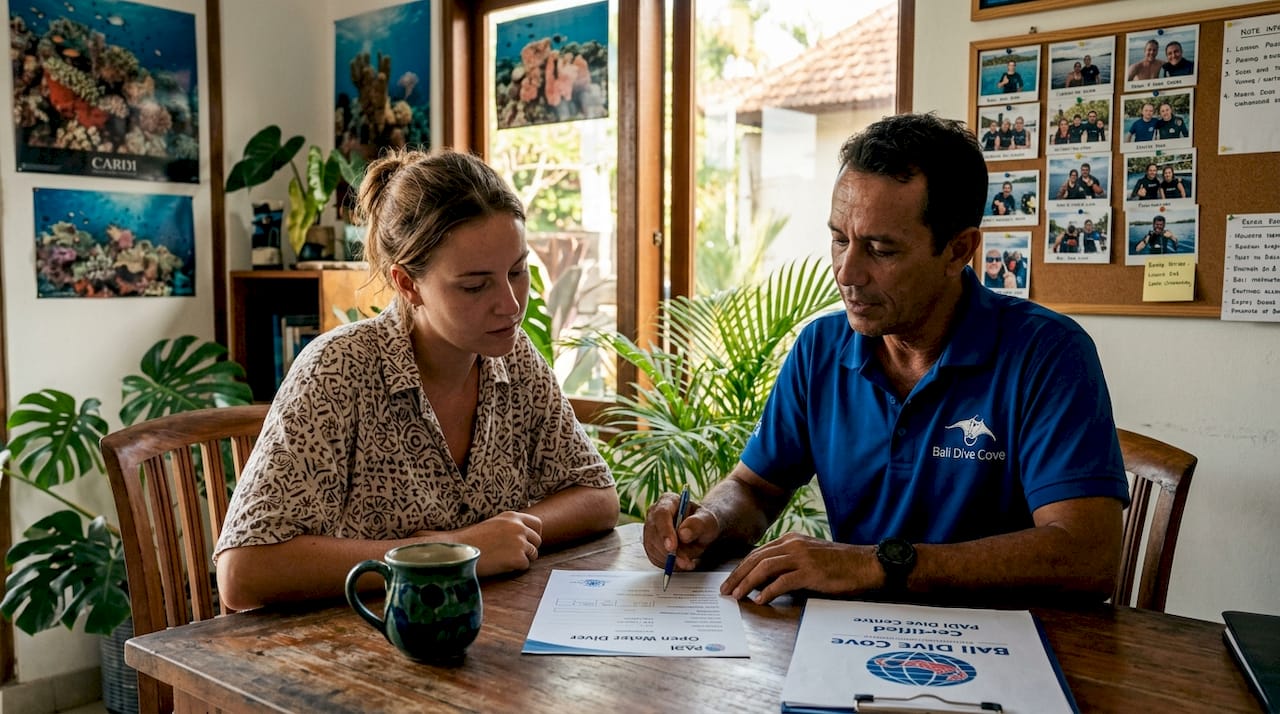
The single most important verification tool available to you is PADI Pro Chek™. This free online service lets you search any instructor’s name or PADI number and confirm their certification level, teaching status, and whether their credentials are current. Evaluating a dive shop using reputation signals like online reviews, social media presence, and past student conversations is equally important according to PADI. Always run a Pro Chek™ search before committing to anyone.
Beyond credentials, look at these signals of instructor credibility:
| Signal | What to look for |
|---|---|
| PADI Pro Chek™ result | Active status, correct certification level |
| Google or TripAdvisor reviews | Consistent praise for teaching style and safety |
| Recent student feedback | Reviews from the past 6 to 12 months carry more weight |
| Social media presence | Regular dive content, student photos, professional tone |
| Years of active experience | More time underwater generally means better situational awareness |
| Dive shop rating | PADI 5-Star status is a good baseline, not a full guarantee |
When reading reviews, prioritise recent ones. A shop with glowing feedback from 2019 but patchy reviews in 2024 and 2025 may have changed staff or lowered standards. Look for mentions of specific instructors by name, descriptions of how clearly skills were taught, and whether students felt safe and supported throughout. These details reveal far more than a star rating ever could.
It’s also worth checking the dive shop’s Facebook page or Instagram to see how instructors present themselves and interact with past students. Some dive communities on social media actively share honest recommendations, and you can often find real people willing to share their experiences if you ask politely in relevant travel or diving groups.
For a more in-depth breakdown of what to look for, our guide on choosing a dive instructor in Bali covers the landscape thoroughly, and our overview of PADI dive instructor qualifications explains exactly what certifications mean in practice.
Pro Tip: Take screenshots of instructor profiles, Pro Chek™ results, and standout reviews. Having these saved makes it much easier to compare a shortlist of two or three instructors side by side before you make a final call.
Speaking with your potential instructor
After your research, it’s essential to have an actual discussion with your shortlisted instructor. Reading about someone and hearing them speak are two completely different experiences.
A practical screening step recommended by PADI is to speak directly with the instructor, either in person or by video call, to confirm the dive shop is a genuine match for your expectations. This conversation gives you a feel for their communication style, patience, and professionalism in a way that no review can replicate.
Here’s how to approach it step by step:
- Make initial contact via email or WhatsApp to introduce yourself and explain your experience level and goals.
- Request a short call or video chat rather than exchanging long text messages. Real-time conversation reveals far more.
- Ask about their teaching style. Do they prefer calm, methodical instruction or a more spontaneous, relaxed approach? Neither is wrong, but one may suit you better.
- Discuss safety procedures. A confident, professional instructor will have clear, specific answers about emergency protocols, equipment checks, and how they manage students in the water.
- Clarify group size and pacing. Ask how many students they take per session and whether they’re comfortable going at a slower pace if you need it.
- Mention your specific concerns. Whether it’s a fear of depth, difficulty with equalisation, or a previous bad experience, a good instructor will respond with empathy and practical solutions.
- Trust your gut. If the conversation feels rushed, dismissive, or overly salesy, that’s telling you something important.
“The best dive experiences start with a meaningful conversation.” — PADI
You can explore the full range of Bali dive course options to have something concrete to reference when you speak with a potential instructor.
Pro Tip: If something feels off during the conversation, trust that instinct completely. Underwater, you need to feel genuinely safe and supported. An instructor who makes you feel rushed or unheard before you’ve even entered the water is unlikely to improve once you’re beneath the surface.
Avoiding common mistakes in instructor selection
Even with the best research and conversations, it’s easy to make a common mistake if you focus only on reputation or branding.
The most widespread error is treating a PADI 5-Star rating or a well-known dive shop name as a full guarantee of quality. PADI’s own guidance on choosing a shop is clear: ratings, credentials, and reputation all matter, but they must be evaluated alongside the specific instructor you’ll be working with and the actual process you’ll go through. A prestigious shop can still employ instructors who aren’t a good fit for your style or needs.
Watch out for these warning signs:
- Evasiveness about credentials. A trustworthy instructor will share their PADI number willingly so you can run a Pro Chek™ verification.
- Dismissing your concerns. If an instructor brushes off questions about safety or medical history, that’s a serious red flag.
- Vague answers about group size. Some shops advertise personal attention but pack eight students into one session. Push for specific numbers.
- No recent positive reviews. Silence on review platforms is nearly as concerning as negative feedback.
- Pressure to book immediately. Reputable instructors and shops don’t need high-pressure tactics to fill their schedule.
- Poor communication before booking. Slow, confusing, or unprofessional messages are often a preview of the instruction itself.
Understanding the role of a PADI instructor in maintaining your safety underwater can also help you spot gaps in how a potential instructor talks about their responsibilities. If they can’t clearly articulate their approach to diver safety, keep looking.
Confirming your booking with the right instructor
Once you’re satisfied with your choice, there are just a few final steps to secure your spot and your peace of mind.
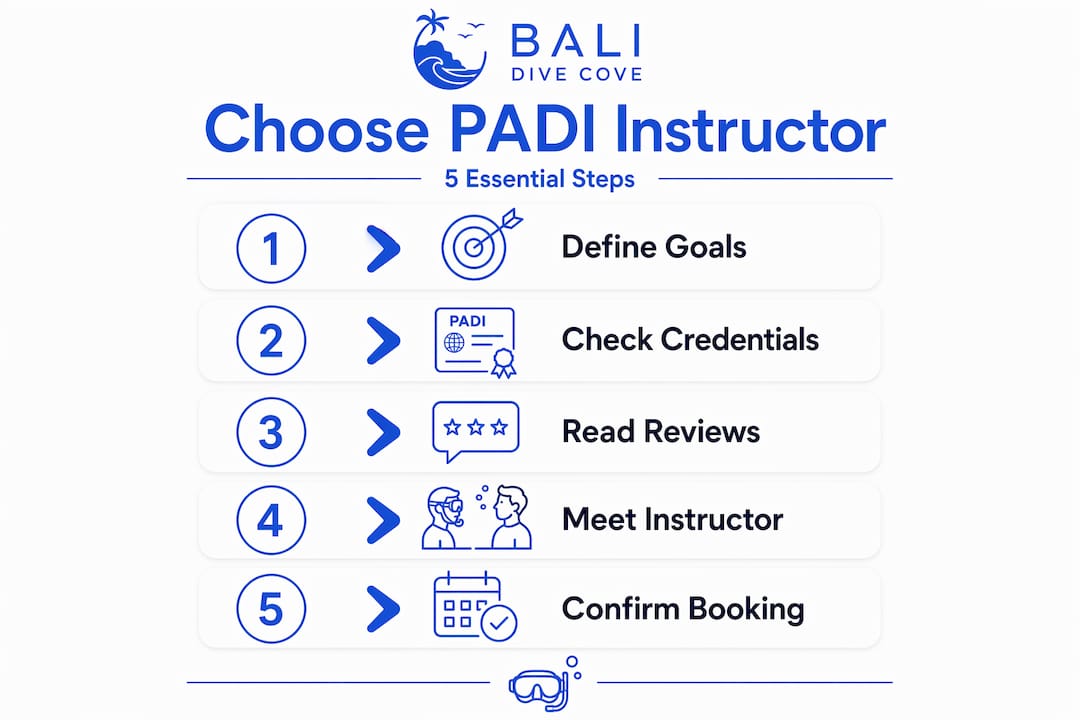
Start with final validation. Re-confirm the instructor’s Pro Chek™ status one more time, especially if there has been a gap of a few weeks since you first checked. Confirm the dive shop’s physical address and look for verified payment channels. Avoid transferring money to personal accounts with no formal booking confirmation.
Follow these steps to complete your booking safely:
- Request a written confirmation that includes your instructor’s name, the course or dive package, dates, inclusions, and the total cost.
- Ask specifically about the cancellation and refund policy before you pay anything.
- Use PADI’s official booking tools where possible. Booking through PADI helps ensure you’re working with a verified operator rather than an unvetted third-party listing.
- Confirm all equipment is included or know exactly what you need to bring or hire separately.
- Save all correspondence between you and the dive shop for reference.
Here’s a final confirmation table to guide you:
| What to confirm | Who to contact if unclear |
|---|---|
| Instructor name and PADI number | Dive shop directly |
| Course dates and session times | Front desk or booking manager |
| What’s included (equipment, certification fees) | Course coordinator |
| Cancellation and refund terms | Dive shop manager |
| Emergency contact procedures | Your instructor |
Getting these details in writing removes ambiguity and ensures both sides share the same expectations from day one.
Our perspective: why choosing your instructor is more than a badge or rating
Bringing all the advice together, we want to share lessons we’ve seen first-hand. After years of guiding divers in Amed, from wide-eyed beginners to seasoned divers chasing new wrecks, one thing stands out clearly: the divers who have the best experiences are the ones who invested time in choosing the right fit, not simply the most recognisable name.
We’ve seen experienced divers genuinely surprised when a highly rated shop didn’t match their expectations, because they chose based on a logo rather than a conversation. We’ve also seen complete beginners arrive nervous and leave utterly transformed, simply because their instructor listened carefully, adjusted the pace, and made them feel truly safe every step of the way. That transformation doesn’t come from a 5-Star badge alone. It comes from a person who genuinely cares.
What we wish every diver knew before booking is this: your learning style matters. Some divers thrive with lots of explanation and theory before entering the water. Others learn best by doing and prefer a hands-on, trial-and-correction approach. Neither is wrong, but if your instructor’s style clashes with yours, the whole experience suffers. Asking that one question, “How do you typically teach?”, can save you from a frustrating few days.
Our how-to guide for selecting instructors expands on this thinking further, and if you’re weighing up whether to certify at all, our overview of the benefits of PADI certification lays out exactly what it opens up for you as a diver.
The underwater world around Amed is extraordinary. Vibrant coral gardens, the haunting beauty of the USAT Liberty wreck in Tulamben, and the chance to drift alongside reef sharks all await. The instructor who guides you there should feel like a trusted companion, not a stranger you happened to book online. Take the time. Ask the questions. The dive of your life is worth it.
Plan your perfect Bali dive with trusted PADI instructors
Ready to make your choice? At Bali Dive Cove, we believe the best diving starts long before you hit the water. Our small-group approach, experienced instructors with over 16 years of time underwater in Amed, and genuine commitment to your pace and safety make us a different kind of dive centre.
Whether you’re brand new to scuba or a certified diver looking for your next adventure, you’ll find everything you need to take the next step. Explore Bali dive courses to find the right programme for your level, browse our Bali dive packages for guided reef and wreck experiences, or revisit our scuba diving beginner’s guide if you’re still deciding where to start. We’re here to answer every question you have before you book a single session.
Frequently asked questions
What is PADI Pro Chek™ and why is it important?
PADI Pro Chek™ is a free online tool that lets you verify your instructor’s certification level and active teaching status instantly, giving you confidence in their credentials before you enter the water. Verifying through Pro Chek™ is one of PADI’s own recommended steps when evaluating a dive shop or instructor.
Can I rely on dive shop ratings or should I look deeper?
Ratings are a useful starting point, but they are not enough on their own. PADI’s guidance on shop selection makes clear that you should always check reviews, verify individual instructor credentials, and speak directly with the person who will be teaching you.
How do I talk to former students before choosing an instructor?
Many dive shops can connect you with past students on request, and social media travel or diving groups are excellent places to ask for honest recommendations. PADI recommends seeking out past student feedback as one of the key reputation signals when choosing where to dive.
What should I ask my instructor before booking my dive?
Ask about their teaching style, safety protocols, group size, years of experience, and how they handle students with specific challenges or concerns. A direct conversation with your instructor is one of the most reliable ways to confirm whether their approach genuinely matches your goals and comfort level.
